Protection status: 11.68% of territory is covered by Chachuna Managed Reserve. 100% of territory is covered by IBA (GEO11). 11.66% IBA (GEO11) is represented by SPA 3.
Species of concern
Saker Falcon (Falco cherrug), Lanner Falcon (Falco biarmicus), Eastern Imperial Eagle (Aquila heliaca), Griffon Vulture (Gyps fulvus), Black Vulture (Aegypius monachus), Egyptian Vulture (Neophron percnopterus), Ruddy shelduck (Tadorna ferruginea), Dalmatian Pelican (Pelecanus crispus), Little Bustard (Tetrax tetrax), Stone Curlew (Burhinus oedicnemus), Lesser Kestrel (Falco naumanni), White-tailed Eagle (Haliaeetus albicilla). Following species of birds are breeding at Chachuna SPA: 1-2 pairs of Saker Falcon; 1 pair of Lanner Falcon; 4-6 pairs of Eastern Imperial Eagle; 10-12 pairs of Griffon Vulture; 8-10 pairs of Black Vulture; 3-5 pairs of Egyptian Vulture; 15-20 pairs of Lesser Kestrel; 1-2 pairs of White-tailed Eagle; 20-25 pairs of Ruddy Shelduck and 5-6 pairs of Stone Curlew. SPA is important wintering habitat for about 2000 Ruddy Shelducks, 40 Dalmatian Pelicans and 10000 Little Bustards. All species are included in the red list of Georgia, Saker Falcon and Lesser Kestrel as Critically Endangered (CR); Black Vulture, Dalmatian Pelican and White-tailed Eagle – Endangered (EN); Lanner Falcon, Eastern Imperial Eagle, Griffon Vulture, Egyptian Vulture, Ruddy shelduck, Little Bustard and Stone Curlew – Vulnerable (VU). Most of them are also included in the IUCN red list, Saker Falcon and Egyptian Vulture as Endangered (EN); Eastern Imperial Eagle, Dalmatian Pelican and Lesser Kestrel – Vulnerable (VU); Black Vulture, Little Bustard and White-tailed Eagle – Near Threatened (NT).
Description of the site
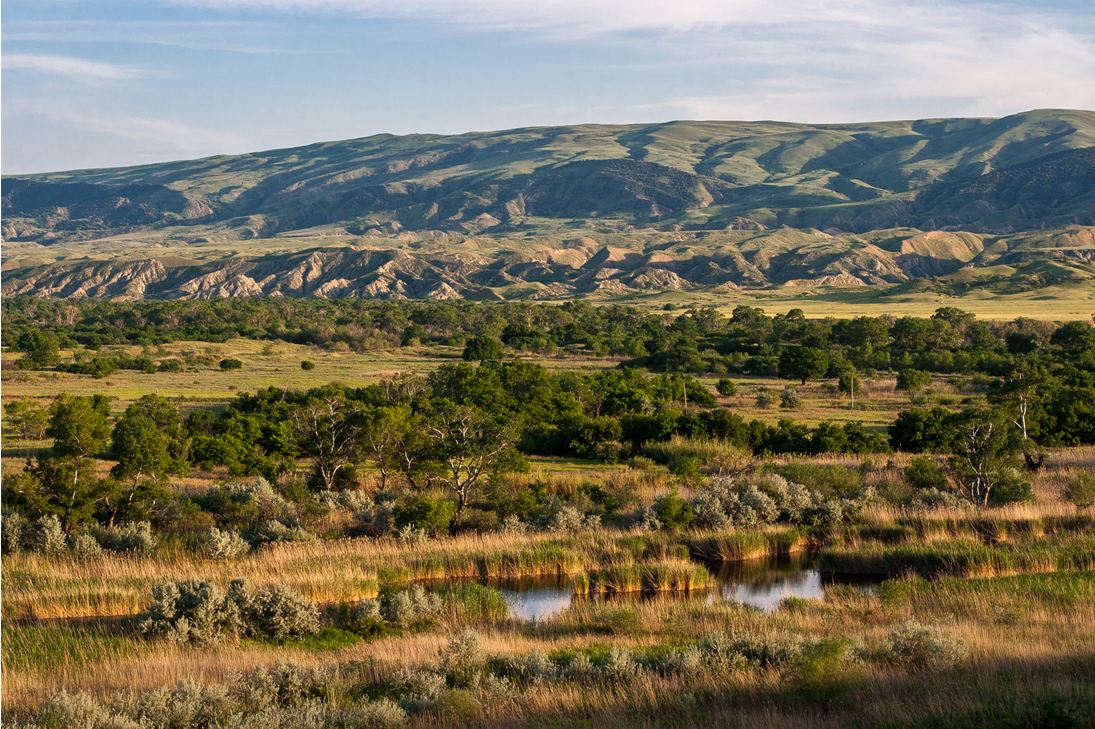
Chachuna SPA is located in the southeastern part of Georgia, at an altitude of 250 – 500 meters. Chachuna has wide variety of habitats. Riparian forest stretch along the river Iori with dominant species as: Poplar (Populus canescens; Populus nigra), Oak (Quercus longipes), White willow (Salix alba). Riverbanks are covered with Reeds (Phragmites australis). River valley is surrounded with badlands, steppe and savanna type forests with arid light forest, semi-desert and steppe vegetation. Dominant Species of arid light forest are: Mastic tree (Pistacia mutica), two species of Juniper (Juniperus foetidissima; Juniperus polycarpos), Wormwood (Artemisia lerchiana) and Perennial grass (Botriochlora ischaemum) (Kvachakidze 2010). See the bird list below for Avifauna.
Monitoring
Large Raptors
Method: Nest count & assessment of breeding success
Period: April- July
Needed Equipment: 20X60 magnification spotting scope; 8X or 10X magnification binoculars; GPS.
Description: At least two field expeditions are required to count nesting pairs and to assess breeding success. During the first expedition, nests should be discovered and nestlings should be counted. Date of the field expedition, GPS location of the nest and number of nestlings should be recorded. During the second expedition, the breeding success should be assessed, by counting number of chicks in the same nests, which were discovered during the first expedition. Species, expedition dates and nesting habitat description see in table 1.
Table1
| Species | I expedition | II expedition | Nesting habitat description |
|---|---|---|---|
| Griffon vulture | Late April | Late June | Ledges or cavities on the cliff. |
| Black vulture | Late April | Late June | On top of trees usually juniper or mastic tree. |
| Egyptian vulture | Late May | July | Ledges or cavities on the cliff. |
| Eastern imperial eagle | May | July | In high tree usually poplar or juniper or on electricity pylons. |
| White-tailed eagle | April | June | In high trees and ledges of cliff. |
Falcons
Method: Direct count of nesting pairs.
Period: April- May
Needed Equipment: 20X60 magnification spotting scope; 8X or 10X magnification binoculars; GPS.
Description: The most falcon Species breed on the ledges of the cliffs or in the cavities of rocks. Lesser kestrel might also nest in old building and in electricity pylons. Usually nests are well concealed. Therefore, counting chicks is challenging. So, the best periods for field expeditions to monitor saker and lanner falcons are second half of April and for lesser kestrel – second half of May. During the expedition falcon nests should be discovered and breeding pairs should be counted. Date of the field expedition, GPS location of the occupied nests (or colony in case of lesser kestrel) and number of breeding pairs should be recorded.
Stone Curlew
Method: Playback count
Period: April- May
Needed Equipment: 4 wheel drive car; player with loud speaker and GPS.
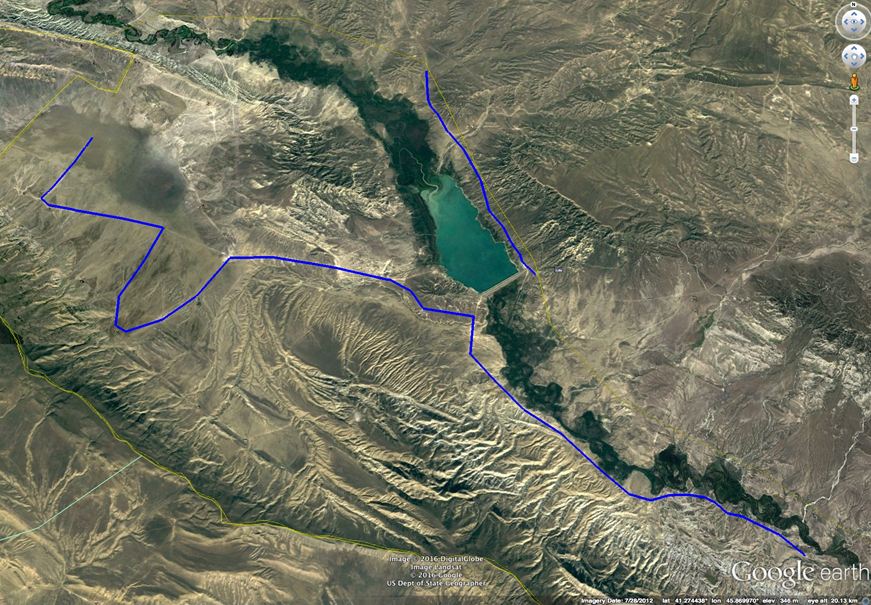
Description: Counting should be performed during dusk or night on predetermined transect from slowly moving vehicle (Map 1)During driving, stone curlews call should be played on player. Stone curlew responds to a call if it’s in the range of 500 meters. GPS coordinates of each response should be recorded. The best time for playback count is during the incubation period, which might varies from April to late May in Chachuna. In order to get the best results, counts should take place at least two times – first in late April and second in mid-May.
Little Bustard
Method: Direct count
Period: January
Needed Equipment: 4 wheel drive car; 20X60 magnification spotting scope; 8X or 10X magnification binoculars; GPS.
Description: Counts should take place in January. All little bustard wintering territory is covered with vehicle. For good visibility fields should be scanned from elevated places using binoculars and scope. Discovered little bustard flocks should be directly counted using spotting scope. Time, GPS location and number of birds should be recorded. Little bustard counts should be coordinated between Chachuna and Vashlovani SPAs.
Ruddy Shelduck
Method: Direct count
Period: May – January
Needed Equipment: 20X60 magnification spotting scope; 8X or 10X magnification binoculars; GPS.
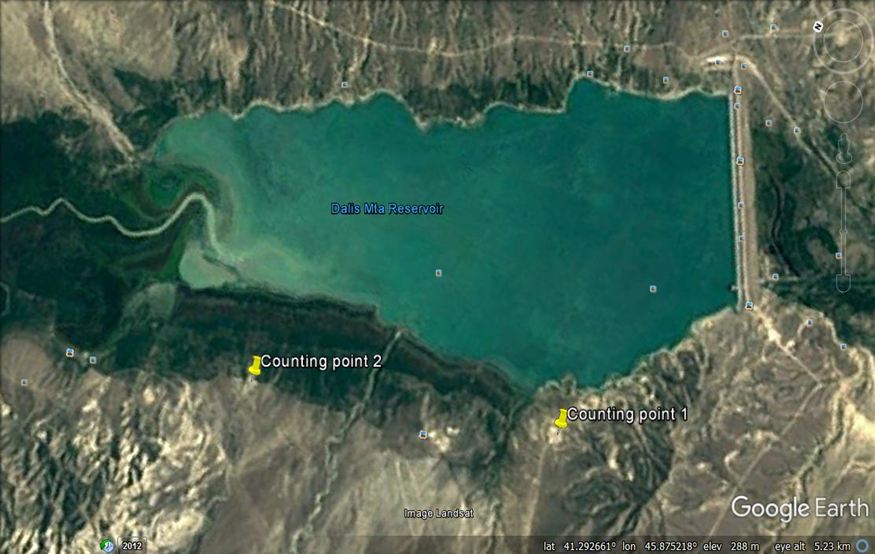
Description: At least two counts should be performed annually. First field expedition should take place in the first half of May to count breeding pairs and their ducklings. After ruddy shelducks hatch, parents with their ducklings appear near the lake. For this time, they are well visible and are much easier to count. Second field expedition should take place in January to count wintering birds. In both cases, Ruddy shelducks should be directly counted on water reservoir (Map 2).
Dalmatian Pelican
Method: Direct count
Period: December – February
Needed Equipment: 20X60 magnification spotting scope; 8X or 10X magnification binoculars; GPS.
Description: Wintering Dalmatian pelicans should be directly counted in every month on Dali water reservoir simultaneously with Ruddy Shelducks from the same counting points (map 2).
Coordinates
Transect 1
Start: 41.323438°/45.748000°
End: 41.212852°/45.977836°
Transect 2
Start: 41.343712°/45.869118°
End: 41.281979°/45.903322°
Counting point 1: Coordinates:
Counting point 2: 41.299577°/45.861820°
Birds recorded in the area 268
| Scientific name | English name | Status in Georgia | IUCN | Red List of Georgia |
|---|---|---|---|---|
| Gavia stellata | Red-throated Diver (or Loon) | M | LC | |
| Gavia arctica | Black-throated (Arctic) Diver (or Loon) | M | LC | |
| Podiceps cristatus | Great Crested Grebe | M; WV | LC | |
| Tachybaptus ruficollis | Little Grebe | YR-R | LC | |
| Pelecanus onocrotalus | Great White Pelican | M; WV | LC | VU |
| Pelecanus crispus | Dalmatian Pelican | M; WV | VU | EN |
| Phalacrocorax carbo | Great Cormorant | YR-R | LC | |
| Microcarbo pygmaeus | Pygmy Cormorant | YR-R | LC | |
| Ardea cinerea | Grey Heron | YR-R | LC | |
| Ardea purpurea | Purple Heron | M | LC | |
| Ardea alba | Great White Egret | M;WV | LC | |
| Egretta garzetta | Little Egret | M;WV | LC | |
| Bubulcus ibis | Cattle Egret | M;WV | LC | |
| Ardeola ralloides | Squacco Heron | M;WV | LC | |
| Nycticorax nycticorax | Black-crowned Night-Heron | M;WV | LC | |
| Ixobrychus minutus | Little Bittern | M;WV | LC | |
| Botaurus stellaris | Great Bittern | M;WV | LC | |
| Platalea leucorodia | Eurasian Spoonbill | M | LC | |
| Plegadis falcinellus | Glossy Ibis | M | LC | |
| Ciconia ciconia | White Stork | M | LC | VU |
| Ciconia nigra | Black Stork | BB | LC | VU |
| Cygnus olor | Mute Swan | M;WV | LC | |
| Cygnus cygnus | Whooper swan | M;WV | LC | |
| Cygnus columbianus | Tundra Swan | M;WV | LC | |
| Anser anser | Gray Lag Goose | WV;M | LC | |
| Anser fabalis | Bean Goose | WV;M | LC | |
| Anser erythropus | Lesser White-fronted Goose | WV;M | VU | EN |
| Anser albifrons | Greater White-fronted Goose | MWV | LC | |
| Tadorna tadorna | Common Shelduck | M;WV | LC | |
| Tadorna ferruginea | Ruddy Shelduck | YR-R | LC | VU |
| Anas platyrhynchos | Mallard | YR-R | LC | |
| Mareca strepera | Gadwall | M;WV | LC | |
| Mareca penelope | Eurasian Wigeon | MWV | LC | |
| Anas crecca | Common Teal | YR-R | LC | |
| Spatula querquedula | Garganey | M;WV | LC | |
| Anas acuta | Northern Pintail | MWV | LC | |
| Spatula clypeata | Northern Shoveler | M;WV | LC | |
| Netta rufina | Red-crested Pochard | M;WV | LC | |
| Aythya fuligula | Tufted Duck | M;WV | LC | |
| Aythya ferina | Common Pochard | M;WV | VU | |
| Aythya nyroca | Ferruginous Pochard | M;WV | NT | |
| Bucephala clangula | Common Golden-eye | MWV | LC | |
| Mergus merganser | Common Merganser | MWV | LC | |
| Mergus serrator | Red-breasted Merganser | MWV | LC | |
| Mergellus albellus | Smew | MWV | LC | |
| Pandion haliaetus | Osprey | M;WV | LC | |
| Haliaeetus albicilla | White-tailed Eagle | YR-R | LC | EN |
| Milvus migrans | Black Kite | YR-R | LC | |
| Circaetus gallicus | Short-toed Snake-Eagle | BB | LC | |
| Accipiter brevipes | Levent Sparrowhawk | BB | LC | VU |
| Accipiter nisus | Eurasian Sparrowhawk | YR-R | LC | |
| Accipiter gentilis | Northern Goshawk | YR-R | LC | |
| Buteo buteo | Common Buzzard | YR-R | LC | |
| Buteo lagopus | Rough-legged Buzzard | WV | LC | |
| Buteo rufinus | Long-legged Buzzard | YR-R | LC | VU |
| Pernis apivorus | European Honey-Buzzard | BB | LC | |
| Hieraaetus pennatus | Booted Eagle | BB | LC | |
| Aquila heliaca | Imperial Eagle | YR-R | VU | VU |
| Clanga clanga | Greater Spotted Eagle | MWV | VU | VU |
| Clanga pomarina | Lesser Spotted Eagle | M | LC | |
| Aquila nipalensis | Steppe Eagle | M | EN | |
| Aquila chrysaetos | Golden Eagle | YR-V | LC | VU |
| Neophron percnopterus | Egyptian Vulture | BB | EN | VU |
| Gypaetus barbatus | Bearded Vulture (Lammergeier) | WV | NT | VU |
| Aegypius monachus | Cinereous Vulture (Eurasian Black Vulture) | YR-R | NT | EN |
| Gyps fulvus | Eurasian Griffon Vulture | YR-R | LC | VU |
| Circus aeroginosus | Western Marsh Harrier | YR-R | LC | |
| Circus cyaneus | Hen (or Northern) Harrier | M | LC | |
| Circus macrourus | Pallid Harrier | M | NT | |
| Circus pygargus | Montagu's Harrier | BB | LC | |
| Falco cherrug | Saker Falcon | YR-R | EN | CR |
| Falco biarmicus | Lanner Falcon | YR-R | LC | VU |
| Falco peregrinus | Peregrine Falcon | YR-V | LC | |
| Falco subbuteo | Eurasian Hobby | BB | LC | |
| Falco columbarius | Merlin | MWV | LC | |
| Falco vespertinus | Red-footed Falcon | M | NT | EN |
| Falco naumanni | Lesser Kestrel | BB | LC | CR? |
| Falco tinnunculus | Common Kestrel | YR-R | LC | |
| Alectoris chukar | Chukar | YR-R | LC | |
| Perdix perdix | Grey Partridge | YR-R | LC | |
| Coturnix coturnix | Common Quail | YR-R | LC | |
| Francolinus francolinus | Black Francolin | YR-R | LC | |
| Phasianus colchicus | Pheasant | YR-R | LC | |
| Grus grus | Common Crane | M | LC | EN |
| Anthropoides virgo | Demoiselle Crane | M | LC | |
| Tetrax tetrax | Little Bustard | M;WV | NT | VU |
| Rallus aquaticus | Water Rail | M | LC | |
| Porzana porzana | Spotted Crake | M | LC | |
| Zapornia parva | Little Crake | M | LC | |
| Zapornia pusilla | Baillon's Crake | M | LC | |
| Crex crex | Corn crake | M | LC | |
| Gallinula chloropus | Common Moorhen | M | LC | |
| Fulica atra | Common Coot | M;WV | LC | |
| Porphyrio porphyrio | Purple Swamphen | BB | LC | |
| Haematopus ostralegus | Eurasian Oystercatcher | M;WV | NT | |
| Himantopus himantopus | Black-winged Stilt | M;WV | LC | |
| Recurvirostra avosetta | Pied Avocet | M;WV | LC | |
| Charadrius hiaticula | Common Ringed Plover | M | LC | |
| Charadrius dubius | Little Ringed Plover | M | LC | |
| Pluvialis apricaria | Eurasian Golden-Plover | M | LC | |
| Pluvialis squatarola | Grey Plover | M | LC | |
| Vanellus vanellus | Northern Lapwing | M | NT | |
| Phalaropus lobatus | Red-necked Phalarope | M | LC | |
| Xenus cinereus | Terek Sandpiper | M | LC | |
| Tringa totanus | Common Redshank | M | LC | |
| Tringa erythropus | Spotted Redshank | M | LC | |
| Tringa nebularia | Common Greenshank | M | LC | |
| Tringa stagnatilis | Marsh Sandpiper | M | LC | |
| Tringa glareola | Wood Sandpiper | M | LC | |
| Tringa ochropus | Green Sandpiper | M | LC | |
| Actitis hypoleucos | Common Sandpiper | BB | LC | |
| Calidris pugnax | Ruff | M | LC | |
| Numenius arquata | Eurasian Curlew | M | NT | |
| Numenius phaeopus | Whimbrel | M | LC | |
| Limosa limosa | Black-tailed Goldwit | M | NT | |
| Limosa lapponica | Bar-tailed Godwit | M | NT | |
| Scolopax rusticola | Eurasian Woodcock | M | LC | |
| Gallinago media | Great Snipe | M | NT | |
| Gallinago gallinago | Common Snipe | M | LC | |
| Lymnocryptes minimus | Jack Snipe | M | LC | |
| Burhinus oedicnemus | Stone-Curlew | BB | LC | VU |
| Glareola pratincola | Collared Pratincole | M | LC | |
| Larus ridibundus | Common Black-headed Gull | M | LC | |
| Hydrocoloeus minutus | Little Gull | MWV | LC | |
| Larus cachinnans | Caspian Gull | M | LC | |
| Gelochelidon nilotica | Gull-billed Tern | M | LC | |
| Sterna hirundo | Common Tern | M | LC | |
| Sternula albifrons | Little Tern | M | LC | |
| Chlidonias leucopterus | White-winged Tern | M | LC | |
| Chlidonias hybrida | Whiskered Tern | M | LC | |
| Pterocles alchata | Pin-tailed Sandgrouse | Cas | LC | |
| Pterocles orientalis | Black-bellied Sandgrouse | Cas | LC | |
| Columba livia | Rock Dove | YR-R | LC | |
| Columba oenas | Stock Dove | YR-R | LC | |
| Columba palumbus | Common Wood-Pigeon | YR-R | LC | |
| Streptopelia turtur | Eurasian Turtle-Dove | BB | VU | |
| Streptopelia decaocto | Eurasian Collared-Dove | YR-R | LC | |
| Spilopelia senegalensis | Laughing Dove | YR-R | LC | |
| Cuculus canorus | Common Cuckoo | BB | LC | |
| Bubo bubo | Eurasian Eagle Owl | YR-R | LC | |
| Asio otus | Northern Long-eared Owl | YR-R | LC | |
| Asio flammeus | Short-eared Owl | YR-R | LC | |
| Otus scops | Eurasian Scops-Owl | BB | LC | |
| Athene noctua | Little Owl | YR-R | LC | |
| Strix aluco | Tawny Owl | YR-R | LC | |
| Caprimulgus europaeus | European Nightjar | BB | LC | |
| Apus apus | Common Swift | BB | LC | |
| Tachymarptis melba | Alpine Swift | BB | LC | |
| Merops apiaster | European Bee-eater | BB | LC | |
| Merops superciliosus | Blue-cheeked Bee-eater | Cas | LC | |
| Coracias garrulus | European Roller | BB | LC | |
| Alcedo atthis | Common Kingsfisher | YR-R | LC | |
| Upupa epops | Common Hoopoe | BB | LC | |
| Dryocopus martius | Black Woodpecker | YR-R | LC | |
| Picus viridis | Eurasian Green Woodpecker | YR-R | LC | |
| Dendrocopos syriacus | Syrian Woodpecker | YR-R | LC | |
| Dendrocopos major | Greater Spotted Woodpecker | YR-R | LC | |
| Leiopicus medius | Middle Spotted Woodpecker | YR-R | LC | |
| Dryobates minor | Lesser Spotted Woodpecker | YR-R | LC | |
| Jynx torquilla | Eurasian Wryneck | BB | LC | |
| Calandrella rufescens | Lesser Short-Toed Lark | BB | LC | |
| Calandrella brachydactyla | Greater Short-Toed Lark | BB | LC | |
| Melanocorypha calandra | Calandra Lark | BB | LC | |
| Lullula arborea | Wood Lark | M | LC | |
| Alauda arvensis | Eurasian Skylark | YR-R | LC | |
| Galerida cristata | Crested Lark | YR-R | LC | |
| Hirundo rustica | Barn Swallow | BB | LC | |
| Hirundo daurica | Red-Rumped Swallow | Cas | LC | |
| Hirundo rupestris | Eurasian Crag-martin | BB | LC | |
| Riparia riparia | Sand Martin | BB | LC | |
| Delichon urbicum | Northern Hause-Martin | BB | LC | |
| Anthus trivialis | Tree Pipit | M | LC | |
| Anthus pratensis | Meadow Pipit | M | NT | |
| Anthus cervinus | Red-Throated Pipit | M | LC | |
| Anthus spinoletta | Water Pipit | M | LC | |
| Anthus campestris | Tawny Pipit | BB | LC | |
| Motacilla alba | White Wagtail | YR-R | LC | |
| Motacilla cinerea | Grey Wagtail | M | LC | |
| Motacilla flava | Yellow Wagtail | BB | LC | |
| Motacilla citreola | Citrine Wagtail | M | LC | |
| Lanius excubitor | Greater Grey (or Northern) Shrike | WV | LC | |
| Lanius minor | Lesser Grey Shrike | BB | LC | |
| Lanius senator | Woodchat Shrike | BB | LC | |
| Lanius collurio | Red-backed Shrike | BB | LC | |
| Prunella modularis | Hedge Accentor (Dunnock) | M | LC | |
| Acrocephalus scirpaceus | Eurasian Reed-Warbler | M | LC | |
| Acrocephalus palustris | Marsh Warbler | M | LC | |
| Acrocephalus arundinaceus | Great Reed-Warbler | BB | LC | |
| Acrocephalus schoenobaenus | Sedge Warbler | BB | LC | |
| Hippolais pallida | Olivaceous Warbler | BB | LC | |
| Hippolais languida | Upcher's Warbler | BB | LC | |
| Sylvia communis | Common Whitethroat | BB | LC | |
| Sylvia curruca | Lesser Whitethroat | BB | LC | |
| Sylvia borin | Garden Warbler | BB | LC | |
| Sylvia nisoria | Barred Warbler | BB | LC | |
| Sylvia atricapilla | Blackcap | BB | LC | |
| Sylvia hortensis | Orphean Warbler | BB | LC | |
| Sylvia mystacea | Menetries's Warbler | BB | LC | |
| Phylloscopus trochilus | Willow Warbler | BB | LC | |
| Phylloscopus collybita | Common Chiffchaff | M | LC | |
| Phylloscopus sindianus | Mountain Chiffchaff | M | LC | |
| Phylloscopus trochiloides | Greenish Warbler | M | LC | |
| Regulus regulus | Goldcrest | M | LC | |
| Muscicapa striata | Spotted Flycatcher | BB | LC | |
| Ficedula parva | Red-breasted Flycatcher | BB | LC | |
| Ficedula semitorquata | Semi-Collared Flycatcher | M | LC | |
| Saxicola torquatus | Common Stonechat | BB | LC | |
| Saxicola rubetra | Whinchat | BB | LC | |
| Monticola solitarius | Blue Rock-Thrush | BB | LC | |
| Monticola saxatilis | Rufous-tailed Rock-Thrush | M | LC | |
| Oenanthe oenanthe | Northern Wheatear | M | LC | |
| Oenanthe isabellina | Isabelline Wheatear | BB | LC | |
| Oenanthe hispanica | Black-eared Wheatear | YR-R | LC | |
| Oenanthe pleschanka | Pied Wheatear | YR-R | LC | |
| Oenanthe finschii | Finsch's Wheatear | YR-R | LC | |
| Phoenicurus ochruros | Black Redstart | YR-R | LC | |
| Phoenicurus phoenicurus | Common Redstart | BB | LC | |
| Erithacus rubecula | European Robin | YR-R | LC | |
| Luscinia svecica | Bluethroad | M | LC | |
| Luscinia luscinia | Thrush Nightingale | M | LC | |
| Luscinia megarhynchos | Common Nightingale | BB | LC | |
| Erythropygia galactotes | Rufous-tailed Scrub-Robin | BB | LC | |
| Turdus merula | Eurasian Blackbird | YR-R | LC | |
| Turdus torquatus | Ring Ouzel | WV | LC | |
| Turdus pilaris | Fieldfare | WV | LC | |
| Turdus iliacus | Redwing | WV | NT | |
| Turdus philomelos | Song Thrush | BB | LC | |
| Turdus viscivorus | Mistle Thrush | YR-R | LC | |
| Aegithalos caudatus | Long-tailed Tit | YR-R | LC | |
| Remiz pendulinus | Eurasian Penduline Tit | YR-R | LC | |
| Parus major | Great Tit | YR-R | LC | |
| Parus caeruleus | Blue Tit | YR-R | LC | |
| Sitta europaea | Wood Nuthatch | YR-R | LC | |
| Sitta neumayer | Rock Nuthatch | YR-R | LC | |
| Tichodroma muraria | Wall-creeper | WV | LC | |
| Certhia familiaris | Eurasian Tree-creeper | M | LC | |
| Troglodytes troglodytes | Winter Wren | YR-R | LC | |
| Miliaria calandra | Corn Bunting | YR-R | LC | |
| Emberiza cia | Rock Bunting | YR-R | LC | |
| Emberiza citrinella | Yellowhammer | YR-R | LC | |
| Emberiza melanocephala | Black-headed Bunting | BB | LC | |
| Emberiza hortulana | Ortolan Bunting | BB | LC | |
| Emberiza schoeniclus | Reed Bunting | YR-R | LC | |
| Fringilla montifringilla | Brambling | WV | LC | |
| Fringilla coelebs | Eurasian Chaffinch | YR-R | LC | |
| Carduelis carduelis | European Goldfinch | YR-R | LC | |
| Carduelis spinus | Eurasian Siskin | WV | LC | |
| Carduelis chloris | European Greenfinch | YR-R | LC | |
| Carduelis cannabina | Eurasian Linnet | YR-R | LC | |
| Coccothraustes Coccothraustes | Hawfinch | YR-R | LC | |
| Bucanetes githagineus | Trumpeter Finch | Cas | LC | |
| Serinus pusillus | Fire-fronted Serin (Red-fronted Serin) | WV | LC | |
| Carpodacus erythrinus | Common Rosefinch | M | LC | |
| Passer hispaniolensis | Spanish Sparrow | YR-R | LC | |
| Passer montanus | Tree Sparrow | YR-R | LC | |
| Passer domesticus | Hause Sparrow | YR-R | LC | |
| Petronia petronia | Rock Sparrow | YR-R | LC | |
| Petronia brachydactyla | Pale Rock Sparrow | BB | LC | |
| Sturnus vulgaris | Common Starling | YR-R | LC | |
| Sturnus roseus | Rose-coloured Starling | BB | LC | |
| Oriolus oriolus | Eurasian Golden Oriole | BB | LC | |
| Garrulus glandarius | Eurasian Jay | YR-R | LC | |
| Pica pica | Black-billed Magpie | YR-R | LC | |
| Pyrrhocorax pyrrhocorax | Red-billed Chough | YR-R | LC | |
| Corvus corax | Common Raven | YR-R | LC | |
| Corvus frugilegus | Rook | M;WV | LC | |
| Corvus corone | Hooded Crow | YR-R | LC | |
| Corvus monedula | Eurasian Jackdaw | YR-R | LC |
Photos and maps
Abbreviations
Seasonal status at a site
- YR-R
- Year-round resident; breeder, present throughout the year
- YR-V
- Year-round visitor; non-breeder, present throughout the year
- BB
- Breeding bird; breeder, absent during the non-breeding period
- SV
- Summer visitor; non-breeder, present in spring and summer
- WV
- Winter visitor; non-breeder, present in late autumn, winter and early spring
- M
- Migrant; bird of passage, present mainly in autumn and spring
- Cas
- Casual (vagrant) species
- ND
- No data
IUCN Red List
- CR
- Critically Endangered
- EN
- Endangered
- VU
- Vulnerable
- NT
- Near Threatened
- LC
- Least Concern
Other
- SPA
- Special Protection Area for birds
- IBA
- Important Bird and Biodiversity Area
- RLG
- Red List of Georgia
- Annex 1
- Birds Directive (2009/147/EC), Annex I