Protection status: 54.25 % of territory is covered by Borjomi-kharagauli Protected Areas. 45.34 % of territory is covered by IBA (GEO15). 16.26 % of IBA (GEO15) is represented by SPA 13.
Species of concern
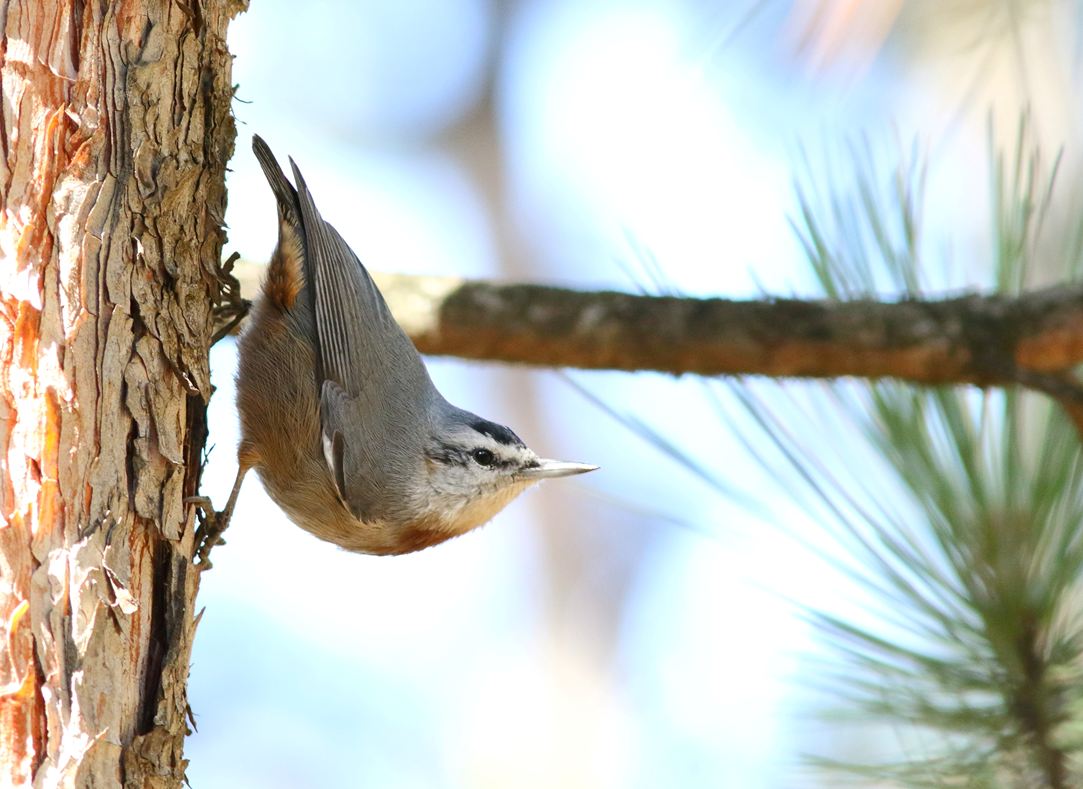
Caucasian Grouse (Lyrurus mlokosiewiczi), Caspian Snowcock (Tetraogallus caspius), Kruper’s Nuthatch (Sitta krueperi). SPA contains the largest breeding populations of Caucasian Grouse and Caspian Snowcock on the Lesser Caucasus. Caucasian Grouse and Caspian Snowcock are included on the red list of Georgia as vulnerable (VU). Caucasian Grouse and Kruper’s Nuthatch are also classified on the IUCN red list as Near Threatened (NT).
Description of the site
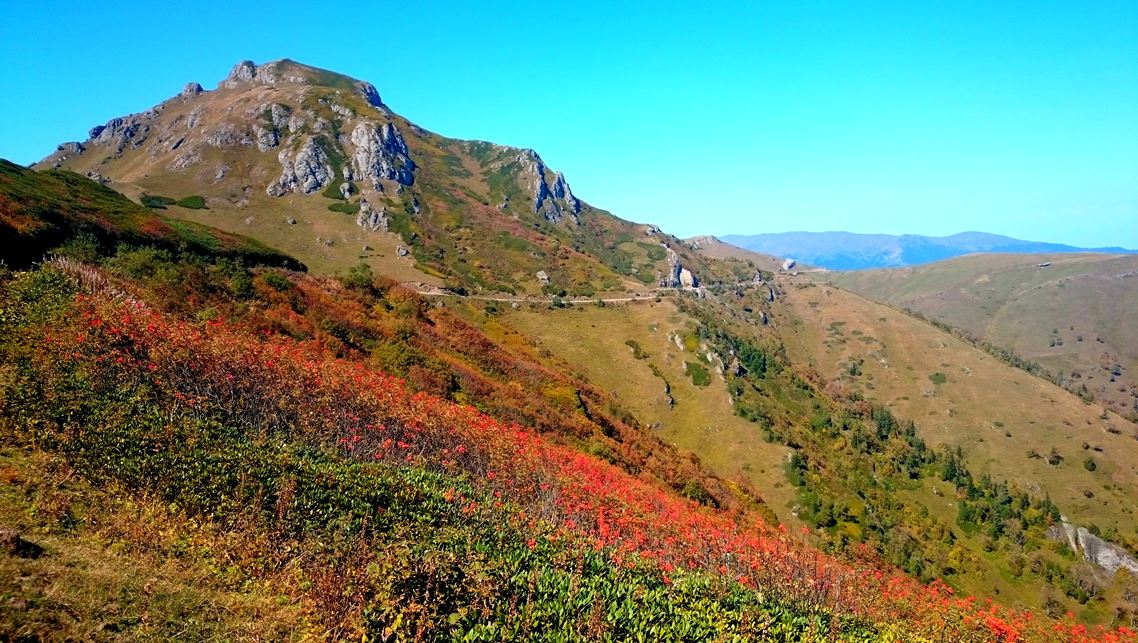
Zekari SPA is located in the central part of Georgia at an altitude of 1300 – 2500 meters. Mixed forests cover the mountain slopes of the SPA. Dominant species of mixed forests are Abies (Abies nordmanniana), Pine (Pinus Sosnowskyi), Caucasian spruce (Picea orientalis), Georgian Oak (Quercus iberica), Beech (Fagus orientalis), Nornbeam (Carpinus caucasica), Oriental Hornbeam (Carpinus orientalis), Sorb (Sorbus caucasigena) and Birch (Betula litwinowii). Over 1850 meters above the sea level Rhododendron (Rhododendron caucasicum) bushes create scrubland. Subalpine and alpine meadows are dominated with Milkvetch (Astragalus microcephalus), Nitre Bush (Nitraria schoberi), Perennial grass (Botriochlora ischaemum), Sweet Wormwood (Artemisia larchima) (Kvachakidze 2010). See the bird list below for Avifauna.
Monitoring
Caucasian Black Grouse
Method: Lekking male count
Period: May
Needed Equipment: 20X60 magnification spotting scope; 8X or 10X magnification binoculars; GPS.
Description: Field expedition should take place every May. During the expedition grouse leks should be discovered, GPS locations of the leks should be recorded and lekking males should be counted. Counts should be repeated at least once more during the season. Leks should be given unique names, mapped using coordinates collected on the field and number of males attending the lek should be recorded, date and weather conditions should be recorded as well. Results should be recorded in the database.
Caspian Snowcock
Method: Calling male count
Period: May
Needed Equipment: 20X60 magnification spotting scope; 8X or 10X magnification binoculars; GPS.
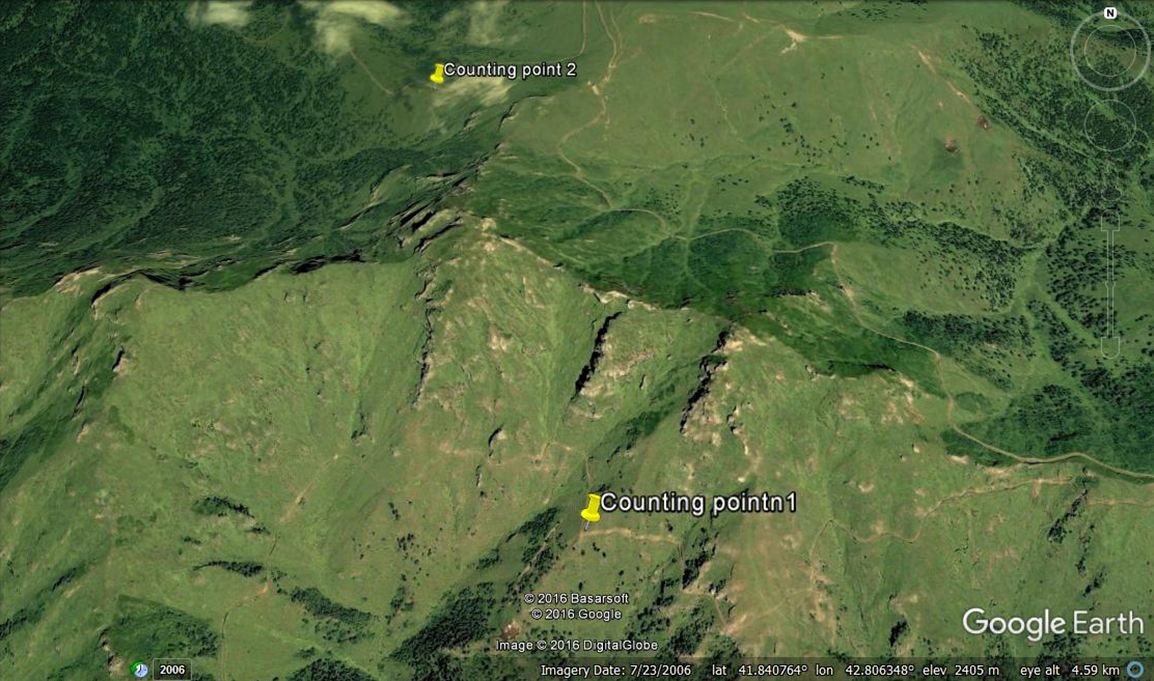
Description: This is a species, which lives in the mountains on bare stony ground. The counting unit is this territorial pair. Calling males are counted in May on several visits to the study area between 07:00 and 09:00 am. Number of calling males, date and weather conditions are recorded. Count data should be recorded in the database. See Map 1 for counting points.
Kruper’s Nuthatch
Method: Point transect, playback count
Period: May
Needed Equipment: Player, 8X or 10X magnification binoculars; GPS.
Description: Counts should take place in first half of May. Counter covers minimum 10 km distance in coniferous forest above 1000 meters from sea level and plays Kruper’s nuthatch’s song in every 250 meters. GPS coordinates of every point and number of individuals responded are recorded.
Counting point 1: 41.836670°/42.806620°
Counting point 2: 41.852527°/42.800061°
Birds recorded in the area 130
| Scientific name | English name | Status in Georgia | IUCN | Red List of Georgia |
|---|---|---|---|---|
| Milvus migrans | Black Kite | M | LC | |
| Circaetus gallicus | Short-toed Snake-Eagle | M | LC | |
| Accipiter brevipes | Levent Sparrowhawk | M | LC | VU |
| Accipiter nisus | Eurasian Sparrowhawk | YR-R | LC | |
| Accipiter gentilis | Northern Goshawk | YR-R | LC | |
| Buteo buteo | Common Buzzard | YR-R | LC | |
| Buteo lagopus | Rough-legged Buzzard | M | LC | |
| Buteo rufinus | Long-legged Buzzard | M | LC | VU |
| Pernis apivorus | European Honey-Buzzard | M | LC | |
| Hieraaetus pennatus | Booted Eagle | BB | LC | |
| Aquila heliaca | Imperial Eagle | M | VU | VU |
| Clanga clanga | Greater Spotted Eagle | MWV | VU | VU |
| Clanga pomarina | Lesser Spotted Eagle | M | LC | |
| Aquila nipalensis | Steppe Eagle | M | EN | |
| Aquila chrysaetos | Golden Eagle | YR-R | LC | VU |
| Neophron percnopterus | Egyptian Vulture | YR-V | EN | VU |
| Gypaetus barbatus | Bearded Vulture (Lammergeier) | YR-V | NT | VU |
| Aegypius monachus | Cinereous Vulture (Eurasian Black Vulture) | YR-V | NT | EN |
| Gyps fulvus | Eurasian Griffon Vulture | YR-V | LC | VU |
| Circus aeroginosus | Western Marsh Harrier | M | LC | |
| Circus cyaneus | Hen (or Northern) Harrier | M | LC | |
| Circus macrourus | Pallid Harrier | M | NT | |
| Circus pygargus | Montagu's Harrier | M | LC | |
| Falco cherrug | Saker Falcon | M | EN | CR |
| Falco biarmicus | Lanner Falcon | M | LC | VU |
| Falco peregrinus | Peregrine Falcon | YR-R | LC | |
| Falco subbuteo | Eurasian Hobby | BB | LC | |
| Falco columbarius | Merlin | M | LC | |
| Falco vespertinus | Red-footed Falcon | M | NT | EN |
| Falco naumanni | Lesser Kestrel | M | LC | CR |
| Falco tinnunculus | Common Kestrel | YR-R | LC | |
| Lyrurus mlokosiewiczi | Caucasian Grouse | YR-R | NT | VU |
| Tetraogallus caspius | Caspian Snowcock | YR-R | LC | VU |
| Coturnix coturnix | Common Quail | BB | LC | |
| Grus grus | Common Crane | M | LC | EN |
| Anthropoides virgo | Demoiselle Crane | M | ||
| Crex crex | Corn crake | BB | LC | |
| Scolopax rusticola | Eurasian Woodcock | M | LC | |
| Columba palumbus | Common Wood-Pigeon | BB | LC | |
| Cuculus canorus | Common Cuckoo | BB | LC | |
| Bubo bubo | Eurasian Eagle Owl | YR-R | LC | |
| Asio otus | Northern Long-eared Owl | YR-R | LC | |
| Asio flammeus | Short-eared Owl | M | LC | |
| Otus scops | Eurasian Scops-Owl | BB | LC | |
| Athene noctua | Little Owl | YR-R | LC | |
| Strix aluco | Tawny Owl | YR-R | LC | |
| Caprimulgus europaeus | European Nightjar | BB | LC | |
| Apus apus | Common Swift | BB | LC | |
| Tachymarptis melba | Alpine Swift | BB | LC | |
| Merops apiaster | European Bee-eater | M | LC | |
| Dryocopus martius | Black Woodpecker | YR-R | LC | |
| Picus viridis | Eurasian Green Woodpecker | YR-R | LC | |
| Dendrocopos major | Greater Spotted Woodpecker | YR-R | LC | |
| Leiopicus medius | Middle Spotted Woodpecker | YR-R | LC | |
| Dryobates minor | Lesser Spotted Woodpecker | YR-R | LC | |
| Jynx torquilla | Eurasian Wryneck | BB | LC | |
| Eremophila alpestris | Horned (or Shore) Lark | YR-R | LC | |
| Lullula arborea | Wood Lark | BB | LC | |
| Alauda arvensis | Eurasian Skylark | BB | LC | |
| Hirundo rustica | Barn Swallow | BB | LC | |
| Hirundo rupestris | Eurasian Crag-martin | BB | LC | |
| Delichon urbicum | Northern Hause-Martin | BB | LC | |
| Anthus trivialis | Tree Pipit | BB | LC | |
| Anthus pratensis | Meadow Pipit | BB | NT | |
| Anthus cervinus | Red-Throated Pipit | M | LC | |
| Anthus spinoletta | Water Pipit | BB | LC | |
| Motacilla alba | White Wagtail | BB | LC | |
| Motacilla cinerea | Grey Wagtail | BB | LC | |
| Motacilla flava | Yellow Wagtail | BB | LC | |
| Motacilla citreola | Citrine Wagtail | M | LC | |
| Lanius collurio | Red-backed Shrike | BB | LC | |
| Prunella modularis | Hedge Accentor (Dunnock) | YR-R | LC | |
| Prunella collaris | Alpine Accentor | YR-R | LC | |
| Sylvia curruca | Lesser Whitethroat | BB | LC | |
| Sylvia atricapilla | Blackcap | BB | LC | |
| Phylloscopus collybita | Common Chiffchaff | BB | LC | |
| Phylloscopus sindianus | Mountain Chiffchaff | BB | LC | |
| Phylloscopus trochiloides | Greenish Warbler | BB | LC | |
| Regulus regulus | Goldcrest | YR-R | LC | |
| Muscicapa striata | Spotted Flycatcher | BB | LC | |
| Ficedula albicollis | Collared Flycatcher | BB | LC | |
| Saxicola torquatus | Common Stonechat | BB | LC | |
| Saxicola rubetra | Whinchat | BB | LC | |
| Monticola solitarius | Blue Rock-Thrush | BB | LC | |
| Monticola saxatilis | Rufous-tailed Rock-Thrush | BB | LC | |
| Oenanthe oenanthe | Northern Wheatear | BB | LC | |
| Phoenicurus ochruros | Black Redstart | BB | LC | |
| Phoenicurus phoenicurus | Common Redstart | BB | LC | |
| Erithacus rubecula | European Robin | BB | LC | |
| Turdus merula | Eurasian Blackbird | YR-R | LC | |
| Turdus torquatus | Ring Ouzel | YR-R | LC | |
| Turdus pilaris | Fieldfare | M | LC | |
| Turdus iliacus | Redwing | M | NT | |
| Turdus philomelos | Song Thrush | BB | LC | |
| Turdus viscivorus | Mistle Thrush | YR-R | LC | |
| Aegithalos caudatus | Long-tailed Tit | YR-R | LC | |
| Parus ater | Coal Tit | YR-R | LC | |
| Parus major | Great Tit | YR-R | LC | |
| Parus caeruleus | Blue Tit | YR-R | LC | |
| Sitta europaea | Wood Nuthatch | YR-R | LC | |
| Sitta neumayer | Rock Nuthatch | YR-R | LC | |
| Sitta krueperi | Küper's Nuthatch | YR-R | LC | |
| Tichodroma muraria | Wall-creeper | YR-R | LC | |
| Certhia familiaris | Eurasian Tree-creeper | YR-R | LC | |
| Troglodytes troglodytes | Winter Wren | YR-R | LC | |
| Cinclus cinclus | White-throated Dipper | YR-R | LC | |
| Miliaria calandra | Corn Bunting | BB | LC | |
| Emberiza cia | Rock Bunting | YR-R | LC | |
| Fringilla montifringilla | Brambling | M | LC | |
| Fringilla coelebs | Eurasian Chaffinch | YR-R | LC | |
| Carduelis carduelis | European Goldfinch | YR-R | LC | |
| Carduelis spinus | Eurasian Siskin | YR-R | LC | |
| Carduelis chloris | European Greenfinch | YR-R | LC | |
| Carduelis flavirostris | Twite | YR-R | LC | |
| Carduelis cannabina | Eurasian Linnet | YR-R | LC | |
| Pyrrhula pyrrhula | Eurasian Bullfinch | YR-R | LC | |
| Coccothraustes Coccothraustes | Hawfinch | YR-R | LC | |
| Serinus pusillus | Fire-fronted Serin (Red-fronted Serin) | YR-R | LC | |
| Serinus serinus | European Serin | YR-R | LC | |
| Carpodacus erythrinus | Common Rosefinch | BB | LC | |
| Loxia curvirostra | Red Crossbill (Common Crossbill) | YR-R | LC | |
| Passer montanus | Tree Sparrow | BB | LC | |
| Passer domesticus | Hause Sparrow | YR-R | LC | |
| Sturnus vulgaris | Common Starling | BB | LC | |
| Garrulus glandarius | Eurasian Jay | YR-R | LC | |
| Pyrrhocorax pyrrhocorax | Red-billed Chough | YR-R | LC | |
| Pyrrhocorax graculus | Yellow-billed Chough | YR-R | LC | |
| Corvus corax | Common Raven | YR-R | LC | |
| Corvus corone | Hooded Crow | YR-R | LC | |
| Corvus monedula | Eurasian Jackdaw | YR-R | LC |
Photos and maps
Abbreviations
Seasonal status at a site
- YR-R
- Year-round resident; breeder, present throughout the year
- YR-V
- Year-round visitor; non-breeder, present throughout the year
- BB
- Breeding bird; breeder, absent during the non-breeding period
- SV
- Summer visitor; non-breeder, present in spring and summer
- WV
- Winter visitor; non-breeder, present in late autumn, winter and early spring
- M
- Migrant; bird of passage, present mainly in autumn and spring
- Cas
- Casual (vagrant) species
- ND
- No data
IUCN Red List
- CR
- Critically Endangered
- EN
- Endangered
- VU
- Vulnerable
- NT
- Near Threatened
- LC
- Least Concern
Other
- SPA
- Special Protection Area for birds
- IBA
- Important Bird and Biodiversity Area
- RLG
- Red List of Georgia
- Annex 1
- Birds Directive (2009/147/EC), Annex I